
Table of Contents
- What Hormonal Pimples Look Like
- Hormonal Acne Symptoms and Patterns
- Hormonal Acne on Chin and Jawline
- Hormonal Acne vs. Regular Acne
- Other Conditions That Look Like Hormonal Acne
- How to Treat Hormonal Acne
- When to See a Dermatologist
- Frequently Asked Questions
Last Updated: October 16, 2026
What Hormonal Pimples Look Like
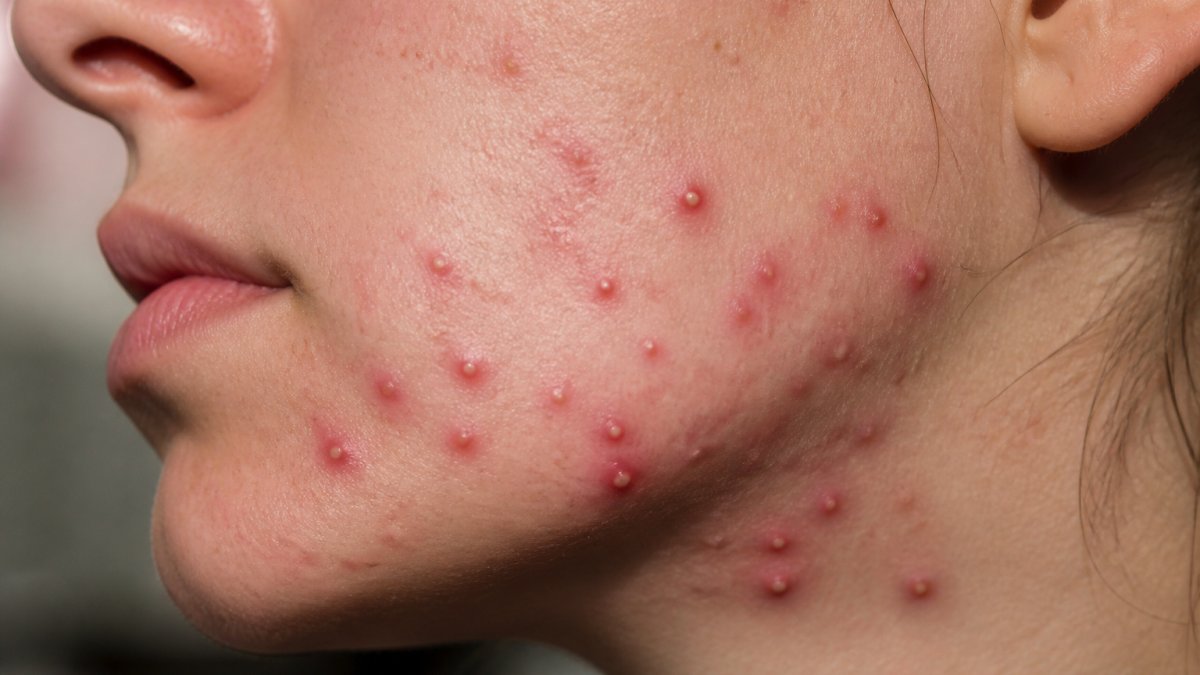
Hormonal pimples are deep, tender bumps that form beneath the skin's surface, typically appearing along the lower face, jawline, and chin. Unlike surface-level whiteheads or blackheads, these lesions sit deeper in the skin and often feel sore to the touch. They develop when hormonal fluctuations trigger excess oil production, clogging pores and trapping bacteria deep within hair follicles.
Hormonal acne can often be identified by its distinctive appearance and location patterns. The key distinguishing feature is that hormonal pimples tend to cluster in specific zones rather than scatter randomly across the face. They're often red, inflamed, and may persist for weeks or even months, especially if left untreated.
Common Appearance Across Skin Tones
Hormonal pimples manifest differently depending on your skin tone, but the underlying inflammation remains consistent. On lighter skin, you'll notice bright red or pink lesions with visible inflammation. Deeper skin tones show darker red, purple, or brown discoloration around the affected area, sometimes with post-inflammatory hyperpigmentation that lingers after the pimple heals.
The texture is the real giveaway across all skin tones. These bumps feel firm and raised, not flat like a blackhead. They may have a small whitehead at the center or remain completely closed beneath the skin surface. Many people describe them as tender or painful to touch, distinguishing them from other acne types that might be painless.
The Types of Lesions You'll See
You might also encounter cystic acne, the most severe form of hormonal breakouts. These are large, fluid-filled sacs deep beneath the skin that can last for months and leave scars if picked or squeezed. Cystic lesions rarely come to a head and require professional treatment to resolve properly.
Hormonal Acne Symptoms and Patterns
The appearance of a breakout is only half the story. The other half is the pattern: when it shows up, how it feels, and how it changes over time. That pattern is what separates hormonal acne from other bumps that look similar.
The Symptoms That Accompany Hormonal Lesions
Hormonal pimples are inflammatory by nature, so they come with a recognizable set of sensations:
- Tenderness or pain: Many people feel soreness before the bump is even visible, which signals inflammation building under the skin.
- Redness and warmth: The surrounding skin often looks flushed and feels warm to the touch.
- Firmness: The lesion feels raised and solid rather than flat.
- Slow healing: A single hormonal lesion can take two to three weeks to flatten, and the mark it leaves can last for months.
- Clustering: Rather than one isolated pimple, you often get several in the same zone at once.
A Simple Self-Check (With Limits)
You can use the following four questions to organize what you are seeing. This is not a diagnosis, but it gives you a clearer picture to bring to a clinician.
- Location: Are the lesions concentrated on the lower face, jawline, and chin, rather than the forehead, nose, or cheeks?
- Lesion type: Are they mostly papules, pustules, nodules, or cysts, with few or no blackheads?
- Sensation: Are they tender or painful rather than painless?
- Timing: Do they flare on a predictable schedule, such as the week before a period, during high-stress periods, or around a known hormonal shift?
How the Pattern Varies Across Life Stages
Hormonal acne is not limited to the week before a period. The pattern shifts depending on what is happening hormonally:
- Teens: Breakouts often begin on the forehead and nose, then migrate to the lower face as hormonal acne becomes more established.
- Adults in their 20s and 30s: Lesions tend to concentrate on the jawline and chin and flare cyclically.
- Pregnancy: Flares are common in the first trimester as hormone levels rise sharply, then often improve later in pregnancy.
- Perimenopause: Shifting estrogen and progesterone levels can trigger new or worsening breakouts, often along the jaw and chin.
- Irregular cycles or conditions such as PCOS: Breakouts may be more persistent and less predictable, sometimes accompanied by excess facial hair or irregular periods.
How Appearance Differs Across Skin Tones
Redness is not the only sign of inflammation. On lighter skin, hormonal lesions usually appear pink or red. On deeper skin tones, the same inflammation may look dark red, purple, brown, or nearly black, and it often leaves post-inflammatory hyperpigmentation that lingers long after the bump has flattened. This matters because a lesion that looks "calm" on deeper skin may still be actively inflamed.
A Practical Way to Track It
Because the pattern matters as much as the appearance, a simple record is more useful than trying to remember. Each time you notice a breakout, note:
- The date
- The location on your face
- The lesion type (papule, pustule, nodule, or cyst)
- Whether it was tender
- Where you are in your cycle, if you track one
A few weeks of notes can reveal a pattern that is hard to see day to day, and it gives a dermatologist concrete information to work with.
Conditions That Can Look Similar
Before assuming your breakouts are hormonal, rule out these lookalikes:
- Rosacea: Persistent redness with small bumps, often triggered by heat, spicy food, or alcohol rather than hormones.
- Folliculitis: Uniform bumps around hair follicles, usually from bacterial or fungal infection rather than hormones.
- Ingrown hairs: Single bumps at the site of hair removal, often with a visible hair trapped beneath the surface.
- Perioral dermatitis: A rash of small bumps around the mouth and chin, sometimes linked to topical steroid use.
If your breakouts do not fit the lower-face, tender, cyclical pattern, one of these may be the real cause, and the treatment is different.
Hormonal Acne on Chin and Jawline
Why the Lower Face Is the Hotspot
The chin and jawline are the most common locations for hormonal acne because this area has a high concentration of oil glands sensitive to hormonal changes.
Hormonal breakouts on the jawline and chin tend to appear as clusters rather than isolated pimples. You might develop three to five lesions in a line along your jawbone or scattered across your chin area.
The lesions in this zone are often deeper and more tender than breakouts elsewhere on the face. Because the jawline and chin have thicker skin, pimples here take longer to surface and heal.
Hormonal Acne vs. Regular Acne
Key Differences in Location, Depth, and Timing
Regular acne can appear anywhere on the face and body, forehead, nose, cheeks, back, and chest. It's often triggered by external factors like poor cleansing, comedogenic products, or bacteria.
The depth and type of lesion differ significantly. Regular acne frequently includes blackheads and whiteheads, surface-level congestion that's easy to see and extract.
Timing is another critical distinction. Regular acne can flare up randomly whenever you're exposed to a trigger, using a new product, sweating during exercise, or touching your face frequently.
Regular acne typically responds well to topical treatments like benzoyl peroxide or salicylic acid applied to affected areas. Hormonal acne often resists these standard treatments because the problem originates internally.
Other Conditions That Look Like Hormonal Acne
Several skin conditions mimic hormonal pimples, making accurate identification important before starting treatment. Keratosis pilaris creates small, firm bumps, usually on the cheeks or jawline, but these are caused by keratin buildup rather than bacteria and oil.
Fungal acne (pityrosporum folliculitis) appears as clusters of small, uniform bumps that itch rather than hurt.
Folliculitis results from bacterial infection in hair follicles and can look similar to acne, but the bumps are usually uniform in size and surrounded by redness. Perioral dermatitis creates a rash of small bumps around the mouth and chin, often triggered by topical steroid overuse rather than hormones.
How to Treat Hormonal Acne
Treating hormonal acne requires a multi-step approach that addresses both the symptoms and the underlying cause. Topical treatments can reduce inflammation and prevent new breakouts, while lifestyle adjustments and sometimes medical treatments address the hormonal component driving the acne.
Skincare Strategies That Support Healing
A consistent skincare routine tailored to acne-prone skin is foundational. Start with a gentle cleanser that removes excess oil without stripping your skin.
Hydration is critical, especially if you're using acne treatments that can dry your skin. Many people with hormonal acne have combination skin, oily in some areas, dehydrated in others.
AcneologyHQ™'s Oil-Free Hydrating Gel ($39.99) provides lightweight hydration without clogging pores. Formulated with hyaluronic acid, aloe, and watercress extract, it supports skin barrier health while keeping your complexion clear.

For pore-clearing support, the Purifying Toner ($29.99) lifts away excess sebum and impurities while maintaining your skin's natural pH.
Additional strategies include:
- Avoid touching your face throughout the day to prevent spreading bacteria
- Change pillowcases frequently to reduce bacterial transfer
- Minimize friction from phone use or tight collars on your jawline
- Manage stress through exercise, sleep, and relaxation techniques
- Avoid comedogenic products that can worsen breakouts
When to See a Dermatologist
If your hormonal acne persists despite consistent skincare and lifestyle adjustments, professional treatment becomes necessary. A dermatologist can prescribe stronger topical treatments, oral medications, or recommend procedures that address hormonal acne more effectively than over-the-counter products alone.
Consider scheduling a dermatology appointment if:
- Your breakouts are severe, painful, or leaving scars
- Over-the-counter treatments haven't improved your skin after 8-12 weeks
- Your acne is affecting your mental health or confidence
- You experience breakouts alongside other hormonal symptoms like irregular periods or excess facial hair
- You're interested in hormonal treatments like birth control or spironolactone
A dermatologist can also confirm whether your breakouts are truly hormonal acne or another condition requiring different treatment. Professional guidance is especially valuable if you have sensitive skin, a history of barrier damage, or are considering oral medications.
Identifying hormonal pimples correctly is the first step toward clearing your skin. These deep, tender lesions on your lower face follow predictable patterns tied to your hormonal cycles, distinguishing them from regular acne or other skin conditions.
AcneologyHQ™ specializes in physician-curated skincare designed specifically for acne-prone skin. Our non-comedogenic, oil-free formulas support your skin barrier while controlling sebum and preventing clogged pores. Shop All to find the right combination of products for your hormonal acne concerns.
Frequently Asked Questions
How can I tell if a pimple is hormonal?
Hormonal pimples typically appear as deep, tender bumps along the jawline, chin, and lower cheeks rather than scattered across the face. They often form in clusters, feel painful when touched, and follow a cyclical pattern tied to your menstrual cycle. Unlike surface whiteheads, hormonal acne lesions are usually cystic or nodular, meaning they're embedded deeper in the skin. If breakouts worsen before or during your period and then improve afterward, that cyclical pattern is a strong indicator of hormonal acne.
What do hormonal acne symptoms include?
Hormonal acne symptoms extend beyond visible bumps. You may notice tenderness or soreness when touching affected areas, redness and inflammation that persists longer than regular pimples, and oily skin in the T-zone even if other areas feel dry. Many people experience a deep ache or throbbing sensation in the jawline or chin. Flare-ups often occur in predictable cycles, typically worsening 7-10 days before menstruation. The breakouts may also feel stubborn, slow to heal, and resistant to over-the-counter treatments designed for regular acne.
How is hormonal acne different from regular acne?
Hormonal acne appears in specific zones (jawline, chin, lower cheeks) while regular acne can pop up anywhere on the face and body. Hormonal pimples are usually deeper, more painful, and cystic, whereas regular acne includes surface blackheads and whiteheads. Regular acne flares unpredictably or stays constant, but hormonal acne follows a monthly cycle tied to menstruation. Hormonal breakouts also tend to be more stubborn and respond better to treatments addressing the root hormonal cause rather than just surface bacteria or excess oil.
Can hormonal acne be deep and painful?
Yes, hormonal acne is often deep and painful. These breakouts frequently form as cystic or nodular lesions that develop beneath the skin surface, making them tender to the touch and slow to heal. The deeper location means they don't have a visible whitehead and can't be easily extracted. This type of acne is harder to treat with topical products alone because the inflammation sits well below the skin's outer layers. If you're experiencing painful, deep bumps on your jawline or chin that last weeks, that's a hallmark of hormonal acne.