
Table of Contents
- Why Sebum Control and Skin Barrier Repair Go Together
- A Skin Barrier Repair Routine for Oily Skin That Actually Works
- The Best Moisturizer for Oily Acne-Prone Skin: What to Look For
- Choosing a Gentle Cleanser for Damaged Skin Barrier Recovery
- Niacinamide for Oily Acne-Prone Skin: Does It Help or Hurt?
- How to Tell Excess Oil From Dehydration-Related Shine
- Product Selection by Skin Type and Severity
- Conclusion
- Frequently Asked Questions
Last Updated: October 19, 2026
Why Sebum Control and Skin Barrier Repair Go Together
The best approach to sebum control and shine is not to strip oil away, but to repair the barrier that regulates it.
Sebum control is the practice of managing how much oil your skin produces and how that oil behaves on the surface. The skin barrier, the stratum corneum, holds water in and keeps irritants out.
That feedback loop explains why so many oily routines backfire. The American Academy of Dermatology's guidance on face washing makes the point plainly: overwashing strips the barrier and triggers rebound oil.
How a Damaged Barrier Makes Shine Worse
A damaged barrier loses water fast, so the skin ramps up sebum production as a protective response, a slick T-zone sitting on top of tight, uncomfortable cheeks.
Barrier dysfunction also shows up as redness, flaking, and stinging from products that used to feel fine. Once compromised, sebum sits on a rougher surface and reflects more light, so shine looks worse even when oil output hasn't changed.
Signs You're Dealing With Barrier Dysfunction, Not Just Oil
Barrier damage has a distinct signature. Look for these signs:
- Skin feels tight or "squeaky clean" right after cleansing
- Shine appears within an hour of washing
- Products sting or tingle, especially around the nose and cheeks
If two or more of these sound familiar, treat the barrier first. Oil control follows.
A Skin Barrier Repair Routine for Oily Skin That Actually Works
A skin barrier repair routine for oily skin works best when it is short: cleanse gently, treat with one targeted active, hydrate with an oil-free formula, and protect with sunscreen.
Here is the order and cadence we recommend:

| Step | Product Type | When | Frequency |
|---|---|---|---|
| 1 | Gentle, low-foam cleanser | AM and PM | Twice daily |
| 2 | Salicylic acid toner | PM | 3-4 times weekly to start |
| 3 | Oil-free hydrating gel | AM and PM | Twice daily |
| 4 | Broad-spectrum sunscreen | AM | Every morning |
Two rules matter more than the product list. Apply hydrating gel to slightly damp skin so humectants can pull water in, and introduce any active slowly. Most people start the toner every other night and build up as tolerance improves.
The Best Moisturizer for Oily Acne-Prone Skin: What to Look For
The best moisturizer for oily acne-prone skin is a lightweight, oil-free formula built on humectants, not heavy occlusives, one that holds water in without sealing oil on top.
The Three Moisturizer Ingredient Classes and What They Do
Moisturizers work through three mechanisms, and their balance determines whether a formula helps or hurts oily, barrier-damaged skin:
- Humectants (glycerin, hyaluronic acid, betaine, panthenol) pull water into the upper layers of skin. They are the safest class for oily skin because they add hydration without adding oil, though they need a light seal or they can evaporate and leave skin tight again.
- Emollients (squalane, caprylic/capric triglyceride, dimethicone) soften and smooth the surface and help fill gaps between skin cells. Lightweight emollients are fine for most oily skin; heavy butters and coconut oil are not.
- Occlusives (petrolatum, mineral oil, heavy waxes) create a physical seal that prevents water loss. They are the most effective at stopping transepidermal water loss but the most likely to feel greasy and clog pores in acne-prone people.
A barrier-repair moisturizer for oily skin should lead with humectants, include a light emollient or two, and skip occlusives or place them low in the formula.
Barrier-Supporting Ingredients to Look For
Beyond the base, these ingredients earn their place in a shine-control moisturizer:
- Ceramides (especially ceramide NP, AP, and EOP) are lipids that make up a significant portion of the skin barrier; topical ceramides replenish what cleansing and actives strip away.
- Niacinamide supports ceramide production and helps regulate sebum. Most practitioners find 2-5% is the useful range for oily skin; higher percentages increase irritation risk without clear added benefit for shine.
- Fatty acids and cholesterol appear alongside ceramides in barrier-repair formulas because the barrier needs all three in roughly the right ratio.
Ingredients to Treat With Caution
If you are acne-prone, scan the label for these before you buy:
- Coconut oil, cocoa butter, shea butter, and other heavy butters high in the list, occlusive and potentially comedogenic for some people.
- Isopropyl myristate and isopropyl palmitate, emollients that some acne-prone users find clogging.
- Added fragrance and essential oils, common irritants on a compromised barrier, even in small amounts.
Why Gel-Based, Oil-Free Formulas Win for This Combination
Gel-based textures absorb fast and leave no residue, which matters when shine is the complaint. A water-based formula delivers hydration without adding lipids the skin doesn't need, keeping moisture retention up while sebum stays managed. Very lightweight gels may not be occlusive enough for severely damaged barriers, though, a gel-cream with ceramides is a better bridge than a richer cream.
Product Pick: Oil-Free Hydrating Gel
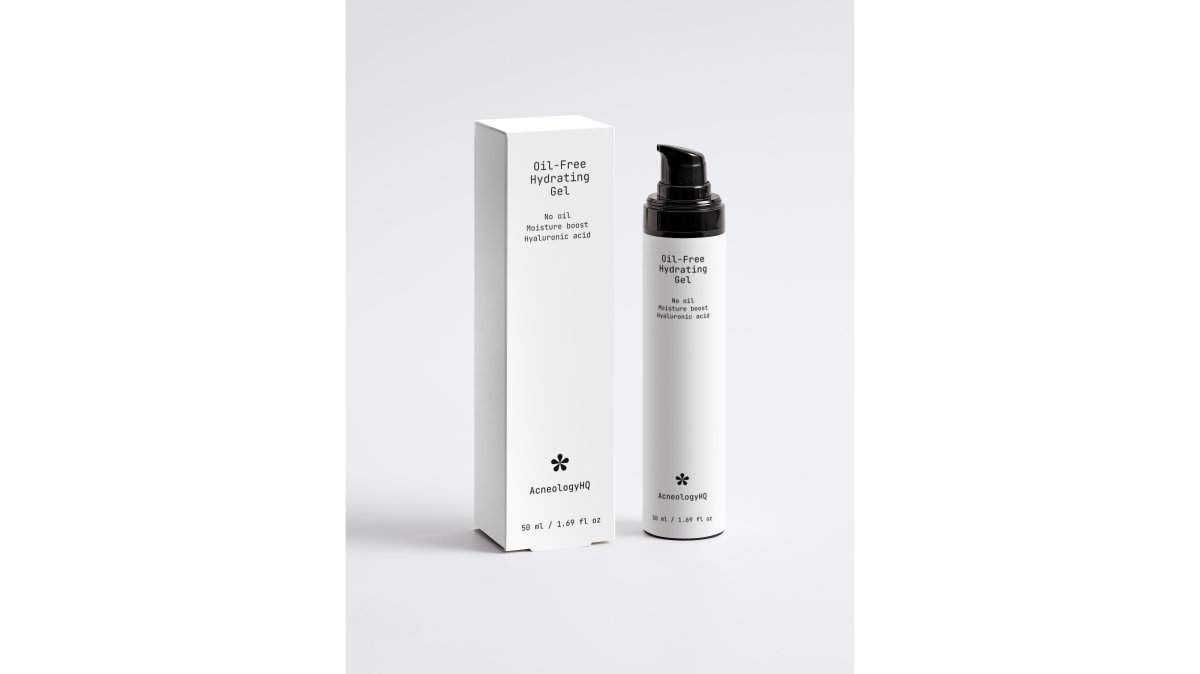
Our pick for this step is the Oil-Free Hydrating Gel ($39.99), built on hyaluronic acid with betaine and watercress extract, plus organic aloe to calm redness.
This is the step most oily routines get wrong: people skip moisturizer to fight shine, the barrier dehydrates, and oil output climbs. A gel formula breaks that cycle without the greasy finish.
Choosing a Gentle Cleanser for Damaged Skin Barrier Recovery
A gentle cleanser for damaged skin barrier recovery should remove oil and debris without leaving skin tight. Look for low-foam, fragrance-free formulas with a mild surfactant system, and avoid anything labeled "purifying," "clarifying," or "deep clean" while your barrier is healing.
The Over-Cleansing Trap
Over-cleansing is the most common cause of barrier damage in oily skin. Washing more than twice daily, using hot water, or reaching for a foaming scrub strips the lipid matrix holding the barrier together; the skin loses water, then produces more oil.
The fix is unglamorous. Cleanse twice a day with lukewarm water, pat dry, and stop there. If your skin feels tight afterward, the cleanser is too strong.
Niacinamide for Oily Acne-Prone Skin: Does It Help or Hurt?
Niacinamide for oily acne-prone skin is generally helpful, with one caveat: concentration matters. At lower percentages it supports the barrier and helps manage oil.
Niacinamide is a form of vitamin B3 that supports ceramide production and helps regulate sebum. It pairs well with salicylic acid if you introduce each separately so you can tell what is working.
Start with one niacinamide product, use it for two weeks, and watch for irritation.
How to Tell Excess Oil From Dehydration-Related Shine
Dehydration-related shine and true excess oil look similar but need opposite responses. Excess oil is a uniform T-zone slick that returns within an hour of cleansing; dehydration shine comes with tightness, flaking, and shine that worsens after washing.
Mattifying products help the first case and hurt the second: on dehydrated skin, oil-absorbing powders and harsh toners push the barrier further down and increase rebound oil.
A Simple Test You Can Do at Home
Wash with a gentle cleanser and apply nothing. Wait 30 minutes.
- Shine returns fast, skin feels comfortable: true excess oil. Focus on oil control and lightweight hydration.
- Skin feels tight, then shines later: dehydration. Focus on barrier repair and humectant hydration first.
- Both tight and shiny at once: barrier dysfunction with rebound oil. Repair before you treat.
Product Selection by Skin Type and Severity
Product selection should match both your skin type and how damaged your barrier is. Here is a decision framework for any product, plus a routine that puts the steps in order.
A Decision Framework for Any Product
Before you buy, evaluate each product against four questions:
- Does it add oil or water? For oily, barrier-damaged skin, water-based and oil-free formulas are the safer default. Oil-free doesn't mean moisture-free, the hydration comes from humectants rather than lipids.
- Does it contain an active, and at what strength? Salicylic acid at 0.5-2% is generally well tolerated for oily skin; higher concentrations and daily use increase irritation risk on a compromised barrier. Niacinamide at 2-5% is the useful range for sebum support.
- Is it fragrance-free and essential-oil-free? On a damaged barrier, fragrance is one of the most common causes of stinging and redness. "Natural" lavender or citrus oils are not automatically gentler.
- Does the texture match your shine concern? Gels and lotions absorb faster and leave less residue than creams. If shine is your main complaint, texture matters as much as ingredients.
Matching Products to Your Barrier Damage Level
Use this framework to decide where to start:
- Mild shine, no irritation: salicylic toner 3-4 nights weekly, gel moisturizer twice daily, sunscreen every morning.
- Shine plus occasional stinging: gel moisturizer and gentle cleanser only for one week, then reintroduce the toner every other night.
- Visible redness and flaking: gentle cleanser and gel moisturizer only until tightness resolves, usually one to two weeks, then add the toner back slowly.
A Practical Morning and Evening Routine
Product order and frequency matter as much as product choice. Here is a routine that balances shine control with barrier repair:
Morning:
- Gentle, low-foam cleanser (or rinse with lukewarm water if skin feels tight)
- Oil-free hydrating gel on damp skin
- Broad-spectrum sunscreen, SPF 30 or higher
Evening:
- Gentle cleanser
- Salicylic acid toner 3-4 nights weekly to start (skip on recovery nights)
- Oil-free hydrating gel
Two rules matter more than the product list. Apply hydrating gel to slightly damp skin so humectants can pull water in, and introduce any active slowly. Most people start the toner every other night and build up as tolerance improves.
The Products That Fit This Framework
The Purifying Toner ($29.99) suits oily and combination skin with mild to moderate shine, using salicylic acid to clear trapped oil and organic lavender flower water to soothe, with no added fragrance.

If you want both steps without piecing them together, the Clear + Hydrate Duo ($59.49) bundles the toner and gel as a one-month routine.

The National Eczema Association's guidance on skin barrier care reinforces the same principle: when the barrier is compromised, hydration and gentle cleansing come before actives.
Conclusion
The hardest part of oily skin care is resisting the urge to strip oil faster. Barrier repair takes patience, and the payoff is calmer skin and steadier oil control, not instant mattification.
At AcneologyHQ™, we built our formulas around that trade-off. Start with the Clear + Hydrate Duo and give your barrier the two weeks it needs.
Frequently Asked Questions
What is the best skincare for repairing the skin barrier while controlling oil?
Look for oil-free, non-comedogenic formulas that combine barrier-supporting ingredients with gentle sebum control. Hyaluronic acid and betaine hydrate without adding oil, while salicylic acid clears pores at low concentrations. A two-step routine like the Clear + Hydrate Duo ($59.49) pairs a salicylic acid toner with an oil-free hyaluronic gel, giving you sebum control and barrier support in one month's supply. Avoid harsh scrubs and high-percentage actives until redness and flaking settle.
Can acne products make a damaged skin barrier worse?
Yes. Overusing strong actives, alcohol-based toners, or aggressive exfoliants strips the stratum corneum and raises transepidermal water loss, which triggers more oil production and irritation. The fix is not to stop treating acne but to switch to gentle, fragrance-free formulas. A gentle cleanser for damaged skin barrier recovery, followed by an oil-free moisturizer, lets you manage breakouts without compounding barrier dysfunction. Introduce one active at a time and stop if stinging or flaking appears.
How can I control oily skin without damaging my skin barrier?
Cleanse twice daily with a mild, non-stripping cleanser, moisturize every morning and night with a lightweight gel, and use salicylic acid no more than once daily. Niacinamide for oily acne-prone skin can help regulate sebum and support ceramide production, but start at 2-5% to avoid irritation. Skip alcohol-heavy astringents and physical scrubs. If your skin feels tight after cleansing, your routine is too harsh and your barrier is asking for a gentler approach.
What ingredients help reduce shine while supporting the skin barrier?
Niacinamide, ceramides, fatty acids, cholesterol, hyaluronic acid, betaine, and glycerin all support barrier function without adding oil. Salicylic acid at low levels clears pores and reduces shine. Avoid high concentrations of glycolic acid and denatured alcohol, which can increase water loss and trigger rebound oil. A gel-based moisturizer with hyaluronic acid and aloe, like the Oil-Free Hydrating Gel ($39.99), hydrates while keeping pores clear and shine under control.
How long does it take to see clearer skin after starting a barrier repair routine?
Most people notice reduced tightness and flaking within one to two weeks of switching to gentle, barrier-supporting products. Shine control and clearer pores typically take four to six weeks because sebum regulation and stratum corneum recovery move slowly. If irritation worsens after two weeks, simplify your routine further. If acne does not improve after eight to twelve weeks of consistent care, see a dermatologist to rule out hormonal or fungal triggers.
Get started with AcneologyHQ™ and build a routine that controls shine without compromising your skin barrier.