
Table of Contents
- Why Oily Dehydrated Skin Needs a Different Moisturizer
- How We Evaluated the Best Moisturizer for Oily Dehydrated Skin
- 1. Oil-Free Hydrating Gel: Best Overall for Oily Dehydrated Skin
- 3. Clear + Hydrate Duo Bundle: Best Value for Long-Term Use
- What to Look For in an Oil-Free Moisturizer for Oily Skin
- How to Hydrate Oily Acne-Prone Skin Without Triggering Breakouts
- Is There a Best Drugstore Moisturizer for Oily Skin?
- Frequently Asked Questions
Last Updated: October 12, 2026
Why Oily Dehydrated Skin Needs a Different Moisturizer
If your skin feels tight after cleansing but looks shiny by noon, you may have oily dehydrated skin, a combination standard moisturizers often make worse.
Most guides treat oiliness and dehydration as opposites. They aren't. Oiliness is how much sebum your glands produce; dehydration is how much water your skin holds.
The American Academy of Dermatology's guidance on skin hydration makes a useful distinction: moisturizers fall into categories such as humectants, emollients, and occlusives, and each behaves differently on oily skin.
Below: how to spot dehydration, what to look for on a label, and our top picks.
How to Tell If Your Oily Skin Is Actually Dehydrated
Oily skin is dehydrated when it produces excess sebum but still feels tight, looks dull, or shows flaky patches. The telltale signs are easy to miss because shine masks them.
Look for these signals:
- Tightness or discomfort within minutes of cleansing
- Shine across the T-zone by midday
- Flakiness around the nose, mouth, or eyebrows
A common mistake is assuming tightness means your cleanser "worked." It usually means your barrier lost water and your glands will respond with more oil, the core problem with oily dehydrated skin.
How We Evaluated the Best Moisturizer for Oily Dehydrated Skin
We judged every option against five criteria: oil-free formulation, non-comedogenic design, humectant content, absorption speed, and price per month of use. Texture mattered too, a moisturizer that sits on the surface fails the brief, however good the ingredients look.
Our picks are AcneologyHQ™ formulas because they were built for exactly this skin profile: physician-curated, oil-free, and non-comedogenic. Here's how they compare.
| Pick | Price | Supply | Best For |
|---|---|---|---|
| Oil-Free Hydrating Gel | $39.99 | Single product | Best overall |
| Clear + Hydrate Duo | $59.49 | 1 month | Complete routine |
| Clear + Hydrate Duo Bundle | $111.99 | 2 months | Best value |
1. Oil-Free Hydrating Gel: Best Overall for Oily Dehydrated Skin
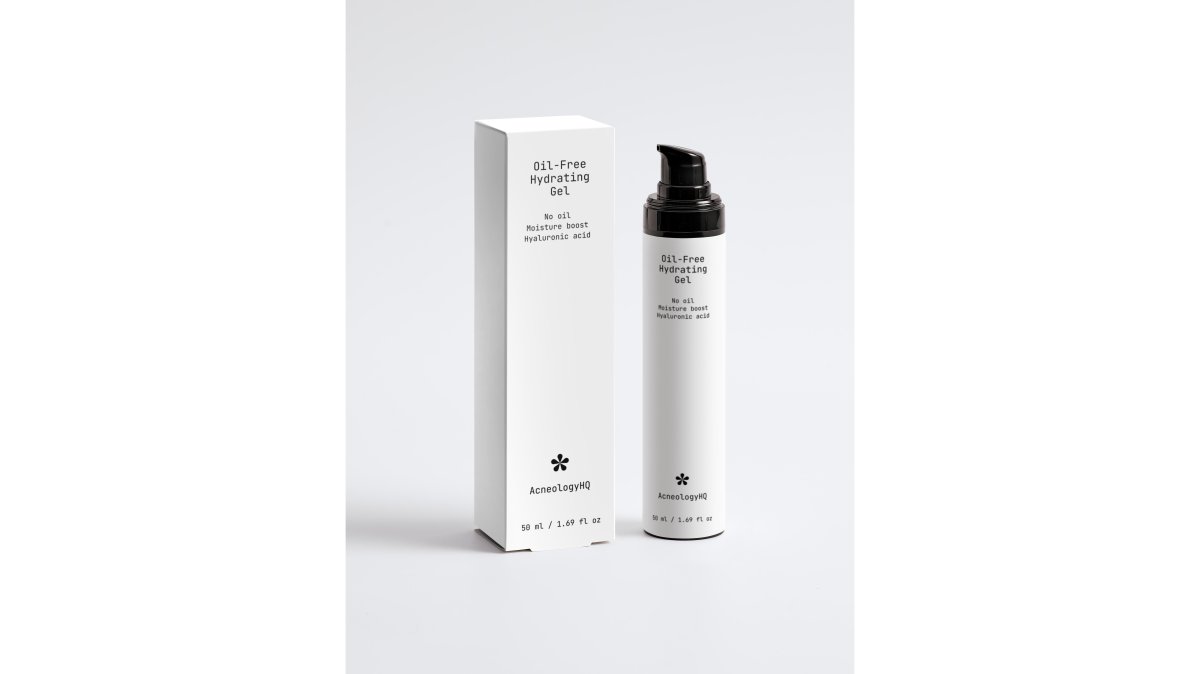
The Oil-Free Hydrating Gel is our top pick because it delivers water-based hydration without a trace of oil.

The clear-hydrate-duo-1-toner-1-gel pairs the Purifying Toner with the Oil-Free Hydrating Gel for a two-step routine in a one-month supply.
For anyone learning how to hydrate oily acne-prone skin, this removes the guesswork: oil control and hydration in the right order.
At $59.49, it costs less than buying the two steps separately and covers a full month of twice-daily use.
The Clear + Hydrate Duo Bundle: Best Value for Long-Term Use
If you already know the routine works, the Clear + Hydrate Duo Bundle is the cheapest way to stay on it: two toners and two gels, a two-month supply, for $111.99.

Consistency is where most oily dehydrated skin routines fail: people see improvement, stop restocking, and slide back. Buying two months at once removes that gap and costs less per month than the single duo.
What to Look For in an Oil-Free Moisturizer for Oily Skin
An oil-free moisturizer for oily skin should list water or aloe juice first, include a humectant like hyaluronic acid or glycerin, and carry a non-comedogenic claim. What most guides skip is why those rules exist, and when they stop being true.
Start With the Three Ingredient Families
Moisturizers work through three mechanisms, and oily dehydrated skin needs a specific balance of them:
- Humectants (hyaluronic acid, glycerin, betaine, panthenol, sodium PCA) pull water into the upper layers of skin without oil, exactly what dehydrated skin is missing. Trade-off: in very dry air, a humectant with nothing over it can pull moisture from deeper skin, so humectant-only gels can feel tight by afternoon in winter.
- Emollients (squalane, caprylic/capric triglyceride, fatty alcohols like cetyl and stearyl alcohol, ceramides) soften the surface and fill gaps between skin cells. Many are non-comedogenic despite not being water-based, so "oil-free" isn't automatically better than "oil-light", a little lightweight emollient can make a gel tolerable in dry conditions without triggering breakouts.
- Occlusives (petrolatum, dimethicone, shea butter, jojoba) sit on top and slow water loss. This is the category oily skin is told to fear and most often misuses. A thin dimethicone layer in a gel-cream is not a petrolatum balm; the problem isn't occlusion itself, but occlusion on congested skin that isn't cleansed thoroughly.
A formula built for oily dehydrated skin is humectant-led, emollient-supported, and occlusive-light. If the first five ingredients are all oils, butters, or heavy silicones, it's a dry-skin formula relabeled.
Read the List, Not the Front Label
"Oil-free" and "non-comedogenic" are marketing claims, not regulated terms. The ingredient list is the only reliable signal:
- Water or aloe juice is the first ingredient
- A humectant (hyaluronic acid, glycerin, betaine, panthenol) appears in the top five
- Any emollient present is lightweight (squalane, caprylic/capric triglyceride, ceramide NP) rather than heavy (shea butter, coconut oil, cocoa butter)
The Trade-Offs Nobody Lists
Every choice has a cost, and pretending otherwise is how people cycle through products:
- Gel-only formulas feel weightless and never clog, but in low humidity they can leave skin tight within hours. Apply to damp skin and consider a light emollient layer over it rather than a heavier cream.
- Gel-creams with dimethicone hold hydration longer and still feel light, but silicone-heavy formulas can pill under makeup or sunscreen. Patch-test the layering, not just the product.
- Fragrance-free matters more than most labels admit. Fragrance is a common irritant, and an irritated barrier produces more oil, not less. If your skin is reactive, treat fragrance-free as non-negotiable.
How to Hydrate Oily Acne-Prone Skin Without Triggering Breakouts
Hydrating oily acne-prone skin comes down to layering water-based products, keeping the barrier intact, and avoiding anything that seals pores shut. The goal is to add water, not oil, and calm the glands overproducing sebum in response to a compromised barrier.
Most guides stop at "cleanse, tone, moisturize." The routine below adds what they miss: product order, how to introduce actives, and how to adjust for weather and indoor air.
A Morning and Evening Routine
Morning
- Cleanse gently with a non-stripping formula. If your skin is not very oily, a water rinse is enough for some people.
- Apply a balancing toner to damp skin. A toner is optional, but it adds a layer of water and can carry humectants.
- Seal with an oil-free, humectant-rich gel while skin is still damp.
- Apply sunscreen as the final step. Sunscreen is non-negotiable, and a lightweight gel or fluid formula layers cleanly over a gel moisturizer without pilling.
Evening
- Remove sunscreen and makeup with a gentle cleanser or a micellar water followed by a rinse.
- Apply treatment actives (see below) to clean, dry skin, not damp skin, unless the product label says otherwise.
- Wait a minute or two for the active to absorb.
- Seal with the same oil-free gel, or a slightly richer gel-cream if your skin feels tight.
How to Introduce Actives Without Wrecking the Barrier
Actives are where most oily dehydrated skin routines fail. The pattern is predictable: someone adds a salicylic acid toner, a benzoyl peroxide spot treatment, and a retinol in the same week, the barrier breaks down, and the skin responds with more oil and breakouts.
A safer sequence:
- Introduce one active at a time, and give it two to three weeks before adding another.
- Start at the lowest frequency that still works: two or three nights a week, not nightly.
- Do not stack two exfoliating acids in the same routine. Salicylic acid and glycolic acid together is a common mistake.
Barrier Repair: The Step Everyone Skips
The barrier is the outer layer of skin that holds water in and keeps irritants out. When it's damaged, water escapes and the glands compensate with oil, the mechanism behind the "tight but shiny" feeling.
Ingredients that support the barrier:
- Ceramides (ceramide NP, ceramide AP, ceramide EOP) replace lipids the barrier has lost.
- Niacinamide supports barrier function and can help with oil control at moderate concentrations.
- Panthenol and allantoin calm irritation.
When to pause irritating products: if your skin stings when you apply a product that used to feel fine, looks red or feels hot, or breaks out in new areas, stop the actives and use only a gentle cleanser and moisturizer for one to two weeks.
Adjusting for Weather and Indoor Air
Oily dehydrated skin behaves differently depending on the environment, so one routine rarely works year-round:
- High humidity: a humectant-led gel is usually enough. Heavy occlusives feel suffocating and can contribute to congestion.
- Cold weather: indoor heating drops humidity sharply. The same gel that worked in summer can leave skin tight. Add a light emollient or gel-cream layer over the humectant rather than switching to a heavy cream.
- Air conditioning: the same drying effect as winter heating. Keep a humectant mist or a second thin layer of moisturizer on hand for midday.
Is There a Best Drugstore Moisturizer for Oily Skin?
The best drugstore moisturizer for oily skin is oil-free, non-comedogenic, and built around humectants rather than heavy emollients.
When comparing, weigh cost per month of use, not per bottle, a cheaper gel you replace every three weeks can cost more than a focused formula that lasts.
Oily dehydrated skin is frustrating precisely because it punishes both extremes: too heavy and you break out, too light and you stay tight.
Frequently Asked Questions
How can you tell if oily skin is dehydrated?
Oily dehydrated skin shows two conflicting signals: excess shine across the T-zone alongside tightness, flakiness, or dullness after cleansing. Your skin produces oil to compensate for a lack of water, not a lack of oil. A quick test: if your face feels tight within minutes of washing but looks greasy by midday, dehydration is likely the cause. Barrier-supporting ingredients like hyaluronic acid and aloe can help restore water without adding oil.
Can a moisturizer hydrate oily skin without clogging pores?
Yes, if the formula is oil-free and non-comedogenic. Gel and gel-cream textures deliver hydration through humectants like hyaluronic acid and betaine rather than heavy occlusives. These lightweight formulas absorb quickly, leave no greasy residue, and keep pores clear. The Oil-Free Hydrating Gel from AcneologyHQ uses exactly this approach: zero oil, a generous dose of hyaluronic acid, and organic aloe to calm redness while hydrating.
What ingredients should you look for in a moisturizer for oily, dehydrated skin?
Prioritize humectants that pull water into the skin, such as hyaluronic acid, betaine, and aloe juice. These hydrate without adding oil. Look for oil-free and non-comedogenic labels, and avoid heavy occlusives that sit on top of the skin. Watercress extract is another useful addition because it supports skin barrier function. Fragrance-free formulas reduce irritation risk, especially if you are also using acne treatments or actives.
Should oily skin use moisturizer at night?
Yes. Overnight is when your skin barrier repairs itself, and it needs hydration to do that effectively. Skipping moisturizer at night can push oil production higher by morning because dehydrated skin overcompensates with sebum. A lightweight gel moisturizer applied after cleansing and any treatments gives your skin water without heaviness. If you use retinoids or acne actives at night, moisturizer also reduces the risk of flaking and irritation.
How long does it take to see results from a new moisturizer for oily dehydrated skin?
Most people notice reduced tightness and flakiness within one to two weeks of consistent use. Improvements in oil balance and skin texture typically take three to four weeks. A 2025 study in the Journal of Drugs in Dermatology found that a physician-curated regimen improved barrier function and skin attributes without worsening acne symptoms. If your skin still feels tight after four weeks, the formula may not be hydrating enough for your climate or routine.